Two men extradited to face charges over sextortion of teenagers
Two men have been extradited to the US over the sextortion of minors. What the case shows about a crime that reaches every region of the world, and what to do if it is happening to you.
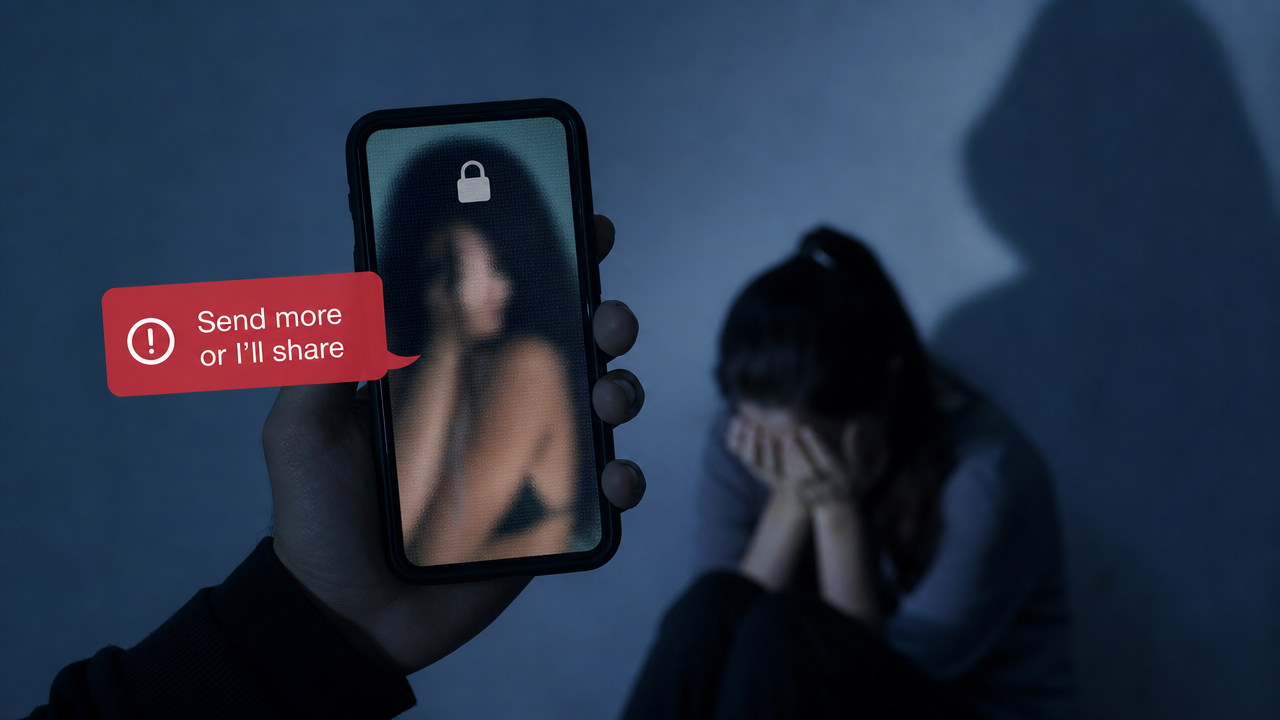
Two men were taken into United States custody in Nigeria and flown to the US on August 27, according to the US Department of Justice. They appeared in federal courts in Mississippi and North Carolina the following day, charged in two separate cases involving the financially motivated sextortion of minors. A teenager died in each case.
Both men have been charged, not convicted. The Justice Department states that the charges are accusations and that both are presumed innocent unless proven guilty in court.
If someone is threatening you right now, our guide on what to do when someone threatens to share private photos has the practical steps. Still Online is not an emergency service. If you are in immediate danger, call your local emergency number.
What the cases involve
Both men were arrested in Nigeria in August 2023, which means close to three years passed between arrest and extradition. The charges include sexual exploitation of a minor resulting in death, coercion and enticement of a minor, and threats made in order to extort. Both face a maximum of life in prison. The charge of child exploitation resulting in death carries a minimum of 30 years.
Both cases came out of Operation Artemis, an FBI effort against sextortion rings operating from Nigeria. The Justice Department says the operation is linked to dozens of teen deaths by suicide in the United States.
One detail worth holding on to: the Justice Department credits Nigerian authorities, including the Federal Ministry of Justice and the Economic and Financial Crimes Commission, as essential to the extraditions. Offenders who operate from another country are not out of reach. It can take years, and it does happen.
This is not one country's problem
Interpol's Operation Jackal IV ran from November 2025 to June 2026 across 22 countries on six continents. Alongside 58 arrests, its analysts flagged a rise in West African organized crime groups using sextortion against minors, with victims as young as 14. The pattern Interpol describes is consistent: contact through social media, trust built up over a short period, coercion into sending explicit images or video, then a threat to send that material to the young person's contacts unless a ransom is paid.
Interpol's Global Financial Fraud Threat Assessment, published in March 2026, found sextortion is now being built into other scams such as romance and investment fraud, often run from scripts and supported by AI-generated content.
The reporting volumes are climbing too. The US-based National Center for Missing and Exploited Children received more than 50,000 reports of financially motivated sextortion in 2025, an average of 137 a day, up from more than 36,000 the year before. These are reports received rather than confirmed cases, and Interpol notes that fraud of this kind is heavily under-reported everywhere.
If this is happening to you
Two things are worth saying plainly.
Paying does not end it. NCMEC's guidance is to get help before deciding whether to pay or comply, because cooperating or paying rarely stops the blackmail.
And you have not done anything wrong. The person applying the pressure is committing a crime. That remains true whatever you sent, and whoever you sent it to.
If it helps to know you would not be alone in speaking up: where NCMEC could identify who filed a public sextortion report, 94% came from the young person or their parent, and most were submitted by the young people themselves. A lot of people your age have already done the thing that feels impossible.
For parents and carers
If a young person in your life tells you this is happening, the first thirty seconds of your response will shape everything that follows. They have almost certainly already decided you will be angry.
You do not need to know the details. You do not need to see anything. What helps most is saying, early and clearly, that they are not in trouble and that you are going to sort this out together. NCMEC puts it directly: the blackmailer is to blame, not the child.
Two practical notes. NCMEC has observed offenders moving conversations quickly onto private and encrypted apps, so the trail may not be where you expect it. And if the young person is under 18, Take It Down, run by NCMEC, is free and works worldwide to stop matching images being uploaded to participating platforms.
Still Online is not an emergency service. If you or someone you know is in immediate danger, call your local emergency number. For reporting routes and support services in your country, see Get help.
If this has happened to you
- Someone is threatening to share private photos of youSextortion is almost always a numbers game run from a script. What to do, what not to do, and why the threat is usually not carried out.
- Random players are adding you on League, then moving you to Discord. Here's what they want.A stranger compliments your game, adds you, then asks to keep talking on Discord. Sometimes photos follow. Here is what that approach usually is, and what to do before you reply.
It happened to them too
First-hand accounts of this exact scam.
My friend found a Facebook page full of AI deepfakes of her
“last night, i woke up to my friend spam calling me, and when i answered, i immediately heard sobs from the other side.…”
A video call on Snapchat became a $500 blackmail demand
“i’m literally shaking right now. i met this girl on bumble and we moved to snapchat and things got... heated. we did a…”